
Backing bringing back Beavers
On public support for the Croydon Beavers Project, and learning even more about the many benefits of these amazing mammals

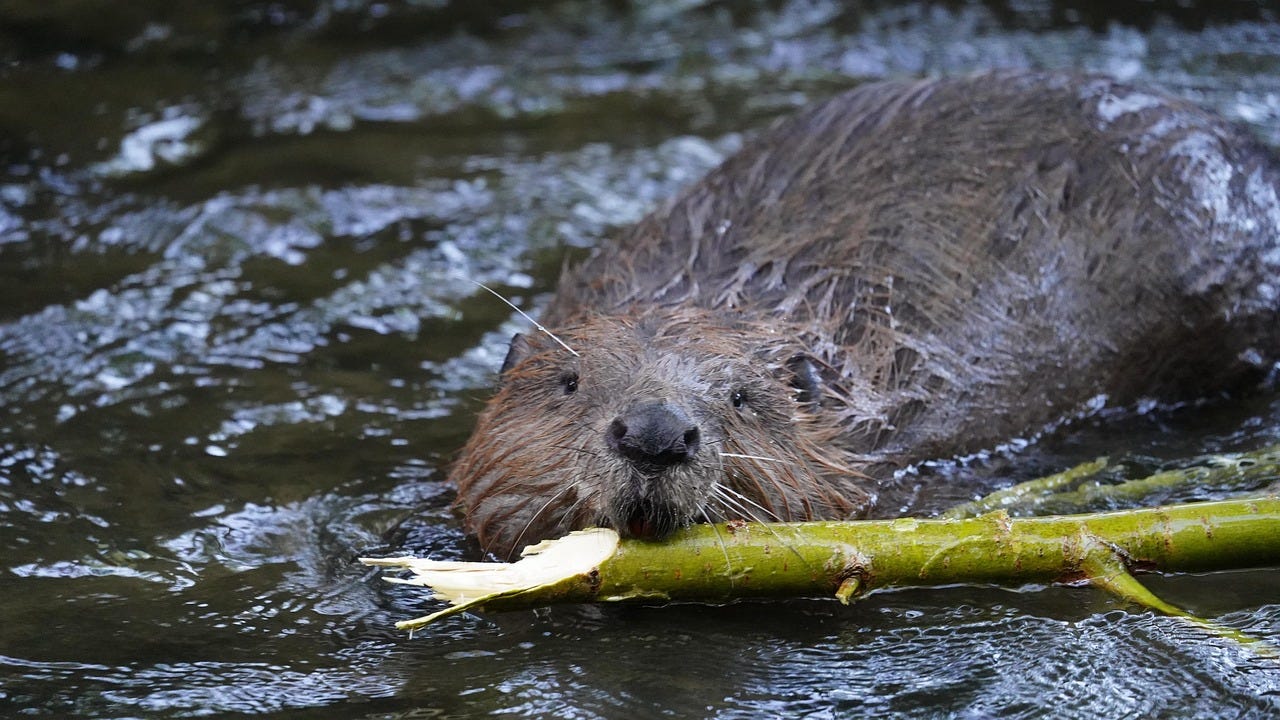
In recent years, I’ve spent several enjoyable (if sometimes very soggy!) days each winter coppicing willow next to the lake in South Norwood Country Park. Now proposals to bring a family of Beavers to live in the Park mean there’s a good chance that conservation volunteers won’t be needed for this task in future as these new residents will be able to do the coppicing themselves.
I’ll miss the days spent next to the water and the opportunities to spot Grey Herons. Little Egrets and other bird life on the lake. But I’ll be very glad to let the Beavers take on some of our other volunteer tasks in the Country Park. Pulling reeds out of the wetlands to give other plant life a chance to thrive is mucky, slippery work with the constant risk of getting stuck in the mud, or worse yet, falling over in it, and the Beavers are much better adapted to such activities than we are.
Volunteers will still be required to help with coppicing and reed clearance for at least another couple of years though as it will be 2028 at the earliest before the Beavers’ arrive. However, consultation on the proposals is now underway and one thing that is already very clear is that there is a lot of public support for the idea. Dozens of people turned out for a recent public meeting advertised only a few days beforehand and a guided walk to explain the proposals proved so popular that a second one had to be organised.
I went on one of these walks led by Ian, the warden for the Country Park, and Ben and Elliot from Citizen Zoo, the organisation who first came up with the idea of having Beavers here. Citizen Zoo have already successfully introduced Beavers in Ealing in West London, on a site called Paradise Fields, which is very similar to the Country Park, but much smaller.
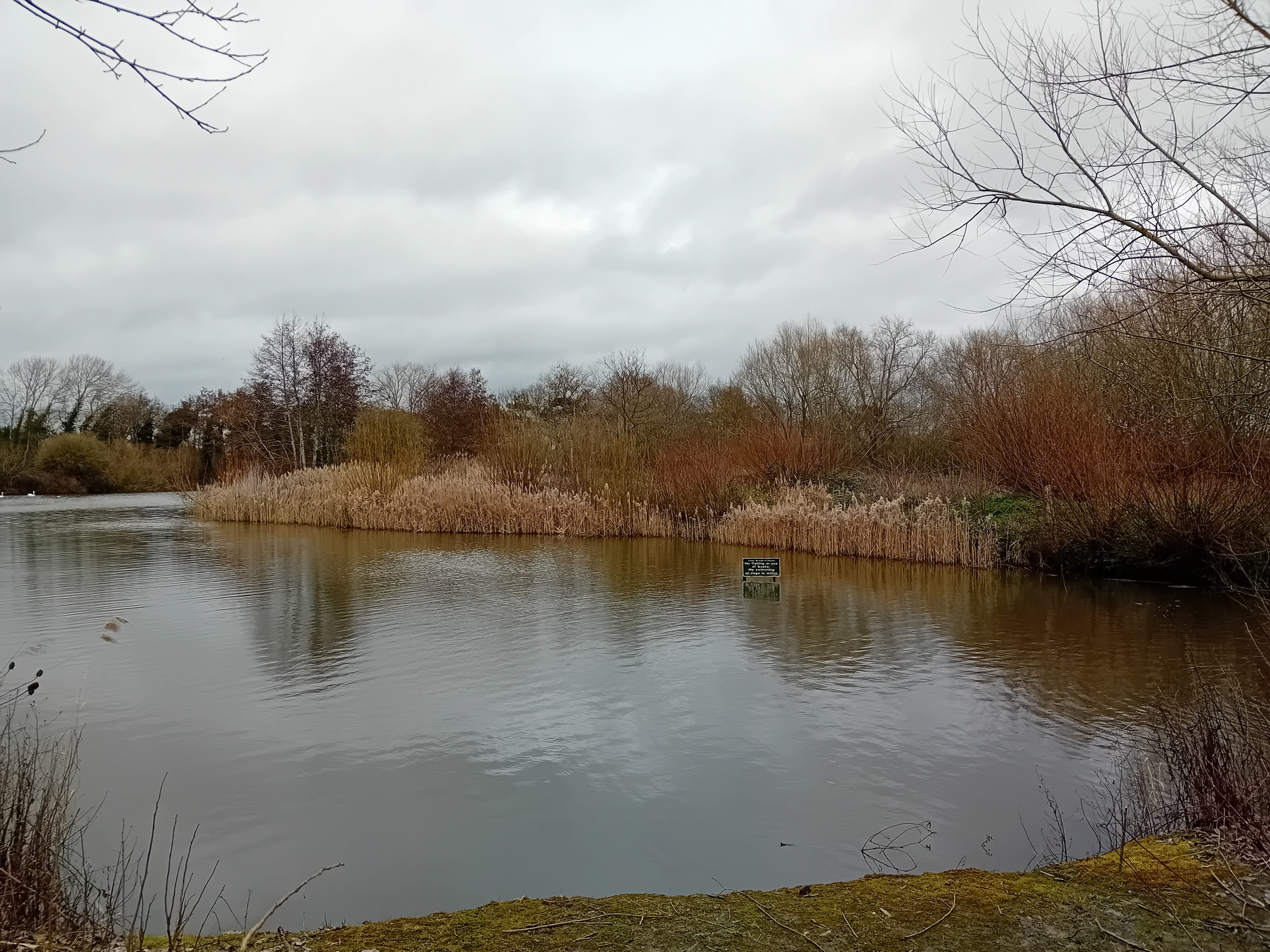
The 40 or so people on the walk in the Country Park all seemed very supportive of the idea of having Beavers here but were curious to know how this would work in practice. There were lots of thoughtful questions about the animals and how they would interact with other species. One question that came up early on was about the risk that dogs pose. Being surrounded by streets of residential housing, the Country Park is a popular place for dog walkers, so it’s an important question. Ben and Elliot were able to reassure us that this has never been a problem at Paradise Fields.
Beavers are crepuscular (great word!), meaning they are mainly active during twilight hours, and as most dog walkers visit during the day, dogs and Beavers are unlikely to come into contact. Even if they do, Beavers have evolved to evade wolves so shouldn’t find it too difficult to avoid the wolf’s domesticated cousins. With their eyes, ears and nose all positioned on the top of their skull, Beavers can swim around with only the top of their head above the water. If needed, they can dive deep underwater and even stay fully submerged for up to 15 minutes at a time. And, if a dog does get too close, they’ll soon be frightened off by the sight of the large, orange teeth that Beavers use for chewing through trees. (The colouring is due to the fact the teeth have a protective coating of iron-rich enamel which makes them incredibly strong.)
If the Croydon Beavers project goes ahead, a very large secure enclosure will be created, encompassing much of the Country Park, and using existing boundaries where possible. This would provide the Beavers with plenty of space to roam around while ensuring they aren’t at risk of wandering out on to the busy transport links that surround the site. The project would also include repairing and reopening the visitor centre which has been closed for some years now.
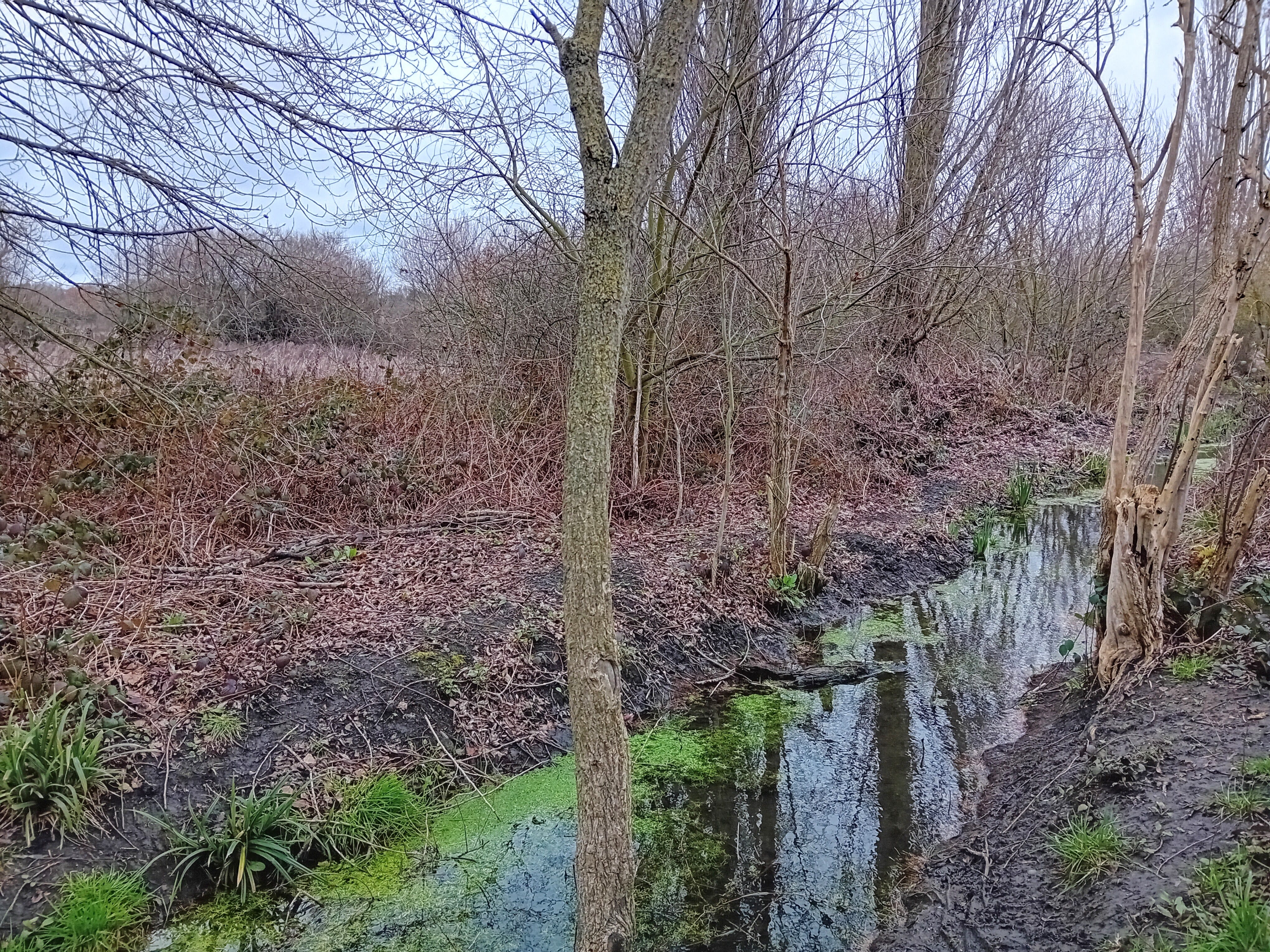
The enclosure would be fully accessible to the public but there may be a need to reroute some of the footpaths in the Country Park if the Beavers’ activities lead to expansion of the wetlands, making some of the current paths impassable. On the walk, we talked briefly about the fact that there are ways to avoid flooding spreading too far if needed. At Paradise Fields, specially designed pipes called beaver deceivers have been fitted into some of the dams to regulate the water level behind them, ensuring that public rights of way through the area can remain open.
Beavers deliver an astonishing array of benefits, not only boosting biodiversity as a result of the new habitats their activities create but also contributing to flood prevention, improved water quality and drought mitigation as their dams store and filter water. At Paradise Fields they discovered another unexpected environmental benefit. Although volunteers there did a lot of work to remove litter in readiness for the new arrivals, they kept finding drinks bottles and other litter on the riverbanks after the Beavers moved in. On closer inspection these turned out to be items several decades old which the Beavers must have dredged up from the bottom of the channels, thus ensuring the area was getting a much-needed deep clean. There are social benefits too - Paradise Fields has seen a significant reduction in anti-social behaviour as the Beavers’ presence has encouraged people to engage with the area in a different way. There are new opportunities for volunteers as well, such as helping to monitor the Beavers’ activities.
It’s still likely to be some time before we can be sure that Beavers will be given an opportunity to deliver similar benefits in South Norwood Country Park. There are feasibility studies to be completed, licences to be obtained, and perhaps, the biggest hurdle of all, a significant amount of funding to be raised. But one thing that is already certain is local people’s enthusiasm for the idea.
If you too would like to see Beavers living in South Norwood Country Park, please respond to the consultation which runs until 22 March. You can also sign up for a webinar on 10 March to learn more about the proposals.
To finish….
Three things I’d like to share:
More urban Beavers: I was chatting to a friend about the Croydon project, and she told me that about the family of Beavers who’ve made their home in the centre of Canterbury where she lives. This includes what are believed to be the first Beaver kits born in a wild urban setting in Britain for centuries.
Nature connection across England: There is an interesting discussion here about some recently published data on the levels of nature connection in different cities and counties across England and the extent to which living in a rural or urban area influences how strongly people feel part of nature and how often they notice and engage with everyday nature.
London’s hidden microclimates: This article is a great insight into some of the more unusual wildlife to have made a home in the capital as a result of the range of habitats on offer here.
Love this, I used to work in South London on River biodiversity based work and know Elliott from many other great projects, but I wasn't aware of this one before now. Great article, thank you.
Great news!